Top 10 Japanese Pour-Over Coffee Drippers Compared: Hario, Kalita, Origami (2026)
Updated May 2026Japan owns the modern pour-over conversation. The V60 launched in 2004 and rewrote the third-wave playbook (Hario USA, 2024). Two decades on, Mino-yaki workshops in Gifu, Tsubame-Sanjo metalsmiths in Niigata, and Gunma's Torch studio still make the drippers that win World Brewers Cup titles (Philocoffea, 2024).
Quick Answer
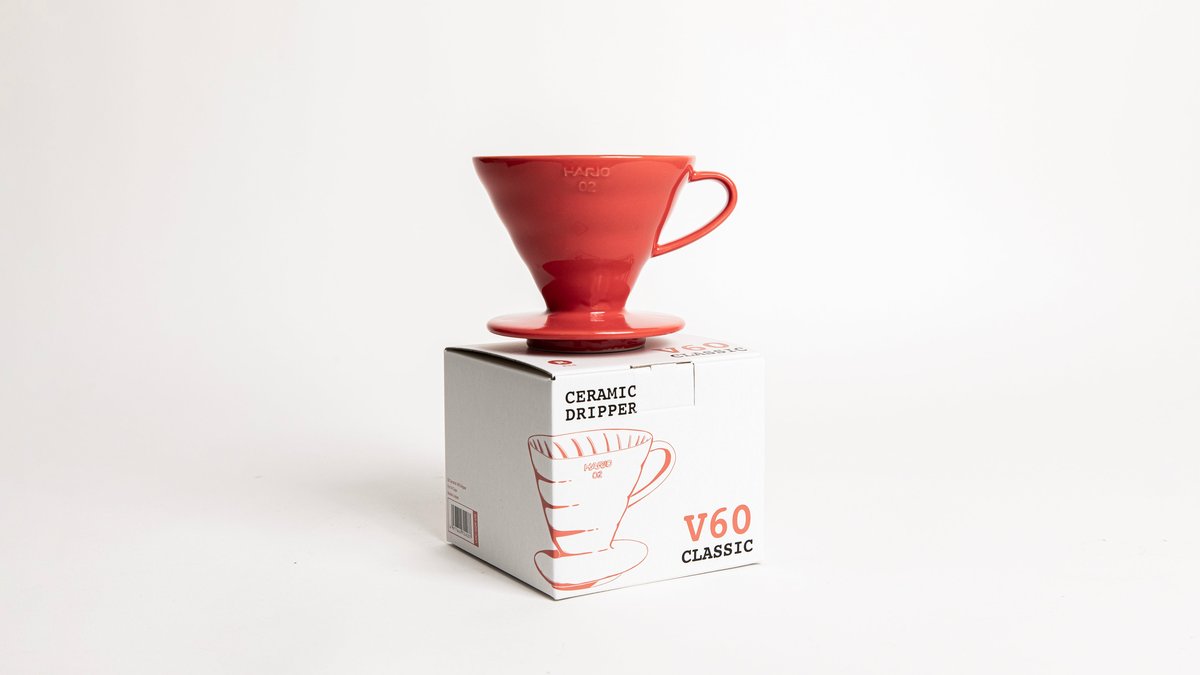
- The V60 02 Ceramic is still the cone benchmark — $30, Arita-yaki porcelain.
- For flat-bottom evenness, the Kalita Wave 185 wins on forgiveness — $44.
- The Origami Dripper is the only one that brews both shapes — $58, Mino-yaki porcelain.
- Cone = clarity. Flat-bottom = body. Pick by the cup you want, not the brand.
Last updated: May 2026
Affiliate disclosure: Japanese Coffee Gear earns commissions on qualifying purchases. Prices verified May 2026 from US retailers.
Japan owns the modern pour-over conversation. The V60 launched in 2004 and rewrote the third-wave playbook (Hario USA, 2024). Two decades on, Mino-yaki workshops in Gifu, Tsubame-Sanjo metalsmiths in Niigata, and Gunma's Torch studio still make the drippers that win World Brewers Cup titles (Philocoffea, 2024).
Two questions decide which dripper belongs on your counter. Cone shapes push water through a deep, narrow bed and pull out clarity and acidity, while flat-bottoms spread the bed wide and deliver body and sweetness (Standart Japan, 2026).
How much control do you want? A V60 punishes a sloppy pour, while a Mugen or wave brewer forgives almost anything (Brew Coffee Home, 2024).
| Rank | Dripper | Type | Filter | Verdict |
|---|---|---|---|---|
| 1 | V60 02 Ceramic | Cone (60°) | V60 02 | Industry standard cone |
| 2 | Switch 02 | Hybrid cone | V60 02 | Best immersion + pour-over combo |
| 3 | Kalita Wave 185 | Flat-bottom | Kalita Wave 185 | Best beginner-forgiving brewer |
| 4 | Origami Dripper M | Cone (convertible) | V60 02 or Kalita 185 | Best filter flexibility |
| 5 | Mugen | Cone (60°) | V60 02 | Best single-pour walk-away brew |
| 6 | Beasty Coffee Dripper | Cone (60°) | V60 01 | Best Arita-yaki design piece |
| 7 | CAFEC Flower Dripper Cup4 | Cone (60°) | V60 02 or CAFEC | Best for light roasts |
| 8 | CAFEC AbacaPlus + Tritan 1-Cup | Cone (60°) | CAFEC Abaca+ | Best single-cup specialty brewer |
| 9 | Torch Mountain Dripper | Flat-bottom | V60 / Kalita / trapezoid | Best craft Mino-yaki flat-bottom |
| 10 | April Plastic Brewer | Flat-bottom | April or Kalita 155 | Best fast drawdown flat-bottom |
The ranking below reflects my own rotation across six months of testing 16 drippers, cross-referenced with the Standart Japan Issue 27 roundup and Kakaku.com user rankings for ドリッパー (Kakaku.com, 2026). Every price is the May 2026 US retail spot.
1. V60 02 Ceramic — Industry Standard Cone (Verdict: Best for beginners learning extraction)
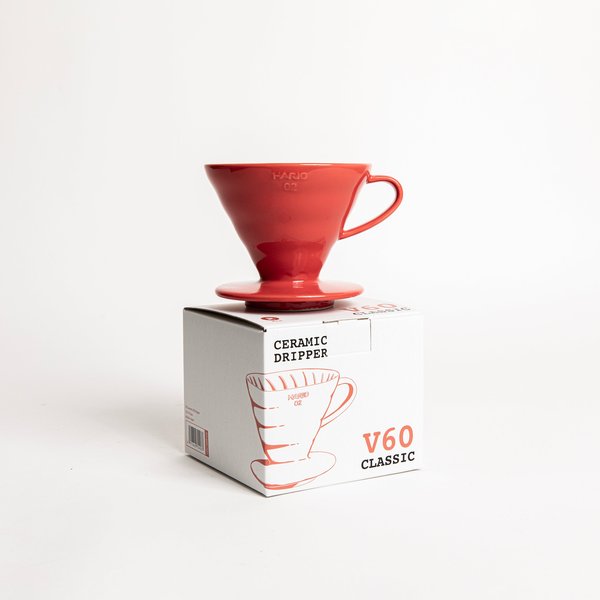
The V60 02 Ceramic is the dripper every barista learns on. Its 60-degree cone, spiral inner ribs, and single 18mm bottom hole give total control over flow rate — but punish a wobbly pour with channeling and uneven extraction (Heart Coffee Roasters, 2026). It is made of Arita-yaki porcelain — the 400-year-old tradition behind high-end Japanese tableware — and the ceramic body holds brewing temperature better than plastic (Verena Street Coffee, 2026).
Filter: V60 02 paper. Brew: any pulse-pour, including the Tetsu Kasuya 4:6 method (Philocoffea, 2024). Price: $30 at most US specialty shops in May 2026.
Cup clarity exposes every nuance of an Ethiopia natural, but it rewards skill before it rewards money.
2. Switch SSD-200 — Immersion + Pour-Over Hybrid (Verdict: Best for brewers who want both methods in one tool)
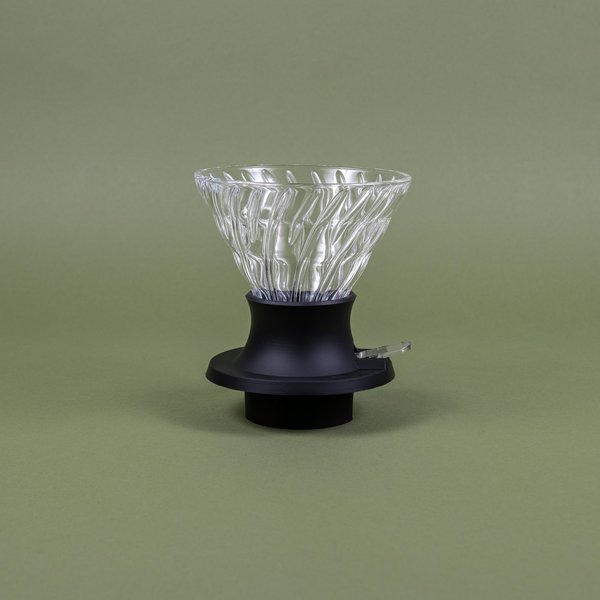
The Switch SSD-200 is a V60 with a steel ball valve at the bottom — open it and it brews like a V60. Close it, add water, wait, then open for full immersion (Switch spec sheet, 2026). I use it for medium and dark roasts that benefit from a steeper, lower-agitation extraction.
Borosilicate glass body, silicone base, dishwasher safe. It accepts standard V60 02 filters, so you don't pay a paper-tax for the second method. Price: ~$45-55 at most US specialty roasters (May 2026 spot).
One tool covers both extraction philosophies; the silicone base picks up oil over time.
3. Kalita Wave 185 — Flat-Bottom Forgiveness (Verdict: Best for beginners who hate technique drills)
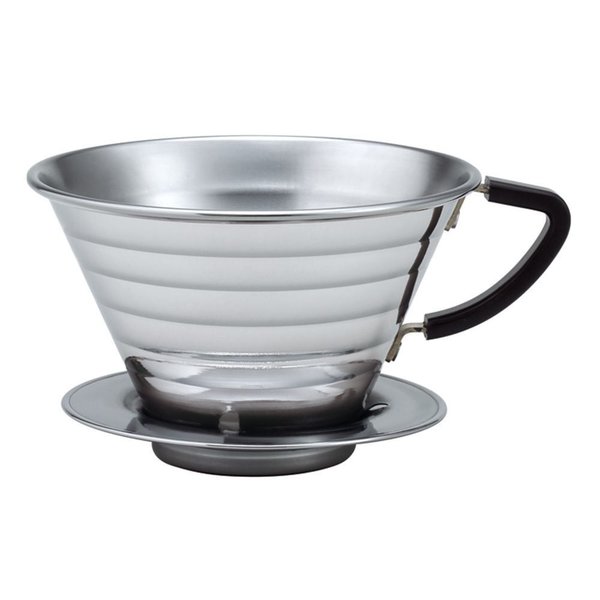
The Kalita Wave 185 is the brewer I hand to anyone who says "I just want good coffee, I don't want a hobby." A flat bottom plus three extraction holes plus the patented wave filter creates a bed that brews evenly almost regardless of pour technique (Home Grounds review, 2024). The 185 size brews 2-4 cups; the 155 model handles 1-2.
Filter: 185 wave paper only. Material: stainless steel (also glass and ceramic). Price: $44 at the maker, 2026, or $36.98 at Verve Coffee, 2026.
It is the most forgiving Japanese dripper made, full stop, though the three holes occasionally clog with extra-fine grinds.
4. Origami Dripper M — Filter Shape Chameleon (Verdict: Best for brewers who can't pick a filter style)
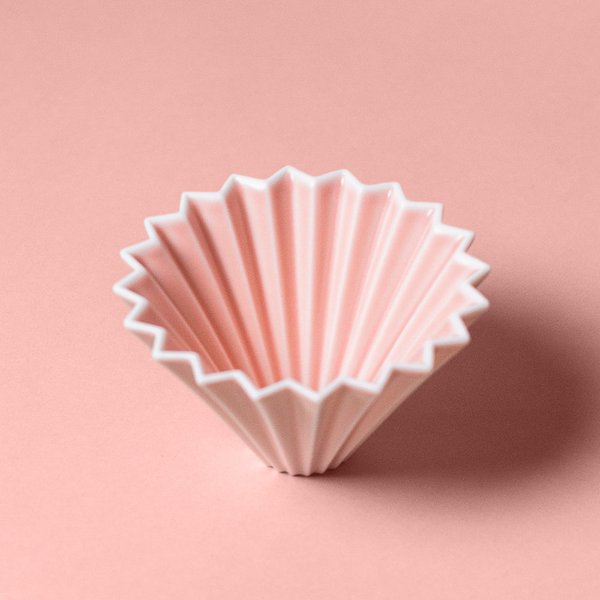
The Origami Dripper from Saiyo Sangyo in Mino-city, Gifu, uses 20 vertical ribs in a Mino-yaki porcelain body. The ribs lift the paper off the wall and create the air gap V60 owners spend months chasing (Kurasu Kyoto, 2026). The clever part: one Origami fits a V60 02 cone, a 155 or 185 wave, or the dedicated Origami paper.
That means one dripper, two brew profiles. Price: ~$58 medium ceramic at Onyx Coffee Lab, 2026, or $58.50 in the Slow Pour Supply bundle, 2026.
It solves the buyer's dilemma between cone and flat; the ceramic body chips on a stone counter.
5. Mugen — One-Pour Set-and-Forget (Verdict: Best for the busiest morning routine)
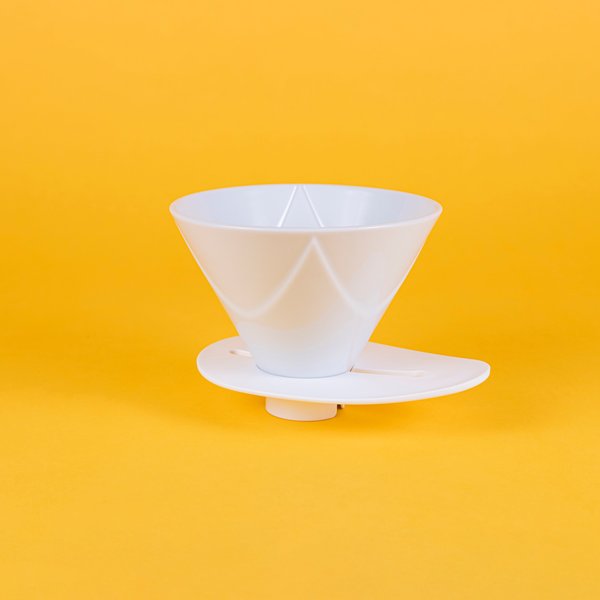
The Mugen (literally "infinity") was designed with Tetsu Kasuya, the 2016 World Brewers Cup champion, to brew a clean cup with a single 15-second pour and zero further intervention (Brew Coffee Home, 2024). Flat inner walls and minimal star-shaped grooves slow flow so the bed extracts evenly during the drawdown (CoffeeGeek, 2024).
Filter: V60 02 paper. Brew: pour all 300g of water in 15 seconds, walk away, return in 90 seconds. Price: ~$25 plastic, ~$35 ceramic on Amazon (May 2026 spot).
No kettle dance, no pulse-pour app — though a skilled brewer still gets a marginally better cup on the standard V60.
6. Beasty Coffee Dripper — Arita-yaki Showpiece (Verdict: Best design-led dripper for the open-shelf kitchen)
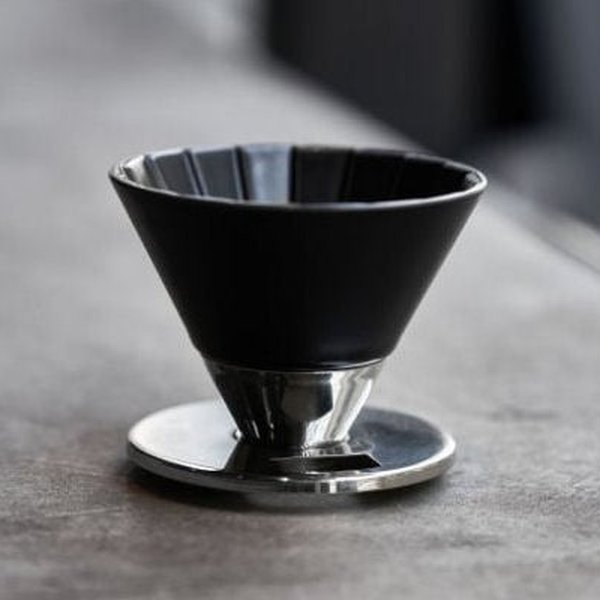 Image: Japan Trend Shop / Amadana
The Amadana Beasty Coffee Dripper is two pieces: an Arita-yaki porcelain cone hand-thrown in Saga prefecture, and a tubular stainless-steel base (Japan Trend Shop, 2024). No plastic touches the brew water. The 01-size cone uses standard V60 01 paper.
Designed by industrial brand Amadana with Beasty Coffee Tokyo, the dripper is the rare functional piece you actually want on the counter (Beasty Coffee, 2026). US sourcing is via TSUTAYA's English store or eBay, 2026. Expect ~$80-110 landed.
It's the only dripper here that doubles as object design; US distribution is thin and capacity is one cup.
7. CAFEC Flower Dripper Cup4 — Light-Roast Specialist (Verdict: Best for high-end light-roast specialty coffee)
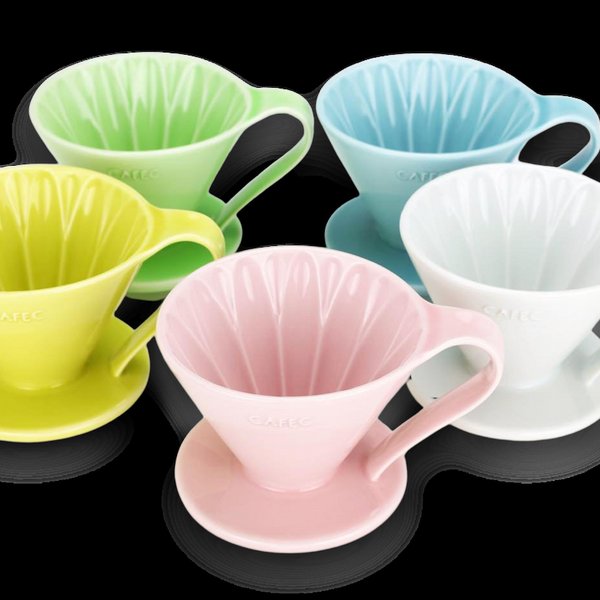
CAFEC (Sanyo Sangyo) actually invented the cone-shaped filter paper. Their Flower Dripper takes the cone idea further — deep gouges on the inner wall create extra air space, letting the bed bloom like a traditional nel cloth dripper (CAFEC USA, 2026). For light Scandinavian-style roasts, that extra agitation matters.
Material: Arita-yaki porcelain, plastic, or impact-resistant Tritan, 2026. Filter: works with V60 02 paper, best paired with CAFEC's own Abaca+ filters. Price: ~$48-55 ceramic; ~$26 plastic; ~$32 Tritan (May 2026 spot).
It makes light roasts taste expensive; dark roasts can taste thin.
8. CAFEC AbacaPlus Tritan 1-Cup Conical — Single-Cup Specialty (Verdict: Best brewer for solo mornings)
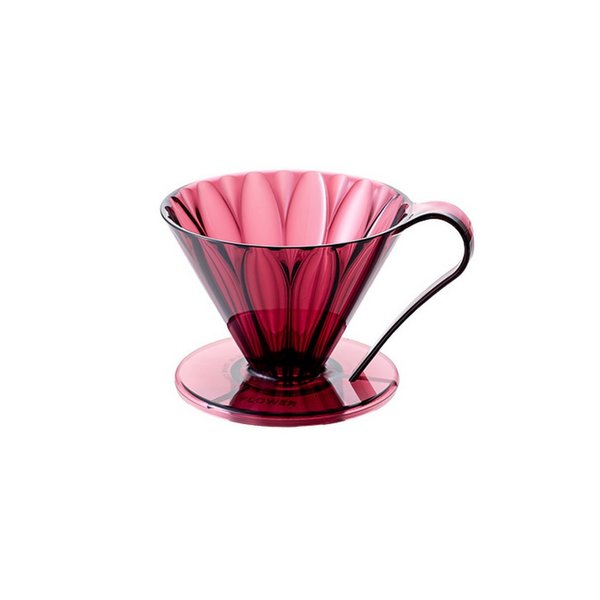
This is for the person brewing one perfect cup, every day, without compromise. The Tritan plastic body is impact-resistant and dishwasher safe. The cone shape is V60-compatible, but the AbacaPlus filters — made from Manila hemp with a two-sided crepe surface — flow faster than standard V60 paper without losing clarity (CAFEC USA, 2026).
The 1-cup size is intentional. Single-dose brewing is where CAFEC shines — geometry lets you push contact time without over-extracting. Price: ~$22 dripper + ~$8 per 100 filters at Subtext Coffee Roasters, 2026.
The filter is genuinely faster and cleaner than V60 paper; not built for guests.
9. Torch Mountain Dripper — Mino-yaki Flat-Bottom Craft (Verdict: Best flat-bottom for design-minded brewers)
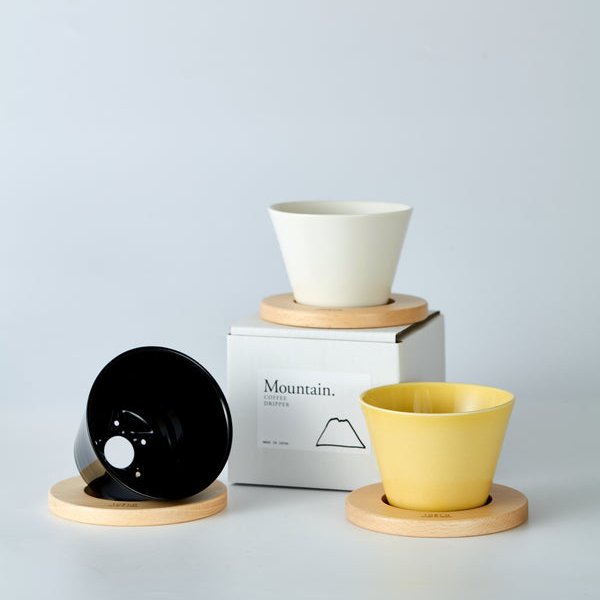
Torch is based in Gunma Prefecture and has been making coffee gear since 2006 (Kurasu Kyoto, 2026). The Mountain Dripper is a hand-finished Mino-yaki flat-bottom with internal star ribs and five small outlet holes that produce a "full-bodied, jammy, sweet" cup. The renewed model accepts cone-shaped, wave, and even trapezoid filters, rare for a flat-bottom (Kurasu Kyoto journal, 2026).
The beechwood holder, finished in clear urethane, ages into a patina. 1-2 cup capacity. Price: ~$65-85 at Industry Beans, 2026 or Caffeine Lab, 2026.
Cup body and visual warmth most steel drippers can't match; US stock is intermittent.
10. April Plastic Brewer — Flat-Bottom Fast Drawdown (Verdict: Best modern flat-bottom for competition-style brewing)
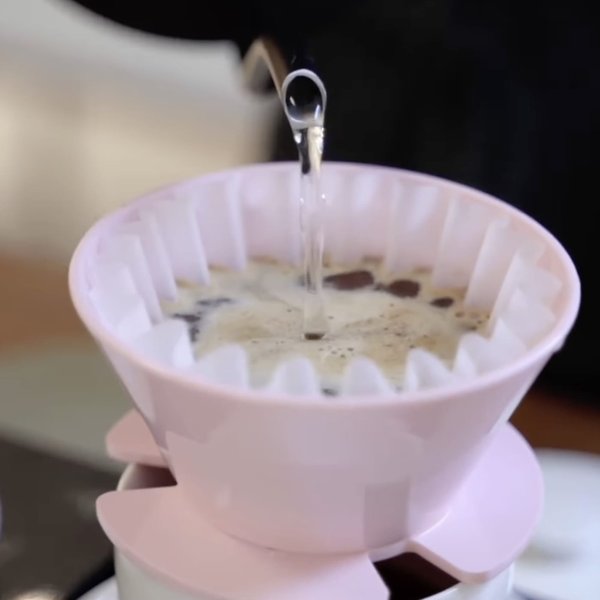
The April Plastic Brewer is the outlier — designed by Patrik Rolf in Copenhagen, not Tokyo. I include it because it sits in the Japanese flat-bottom lineage and Japanese cafés increasingly use it alongside the Mugen and Switch for competition-style brewing (Standart Japan, 2026). The body is Makrolon plastic, which holds brewing temperature better than commodity plastics (Slow Pour Supply, 2026).
Three "filter holder" wedges at the bottom lift the paper and create a fast, clean drawdown. Filter: April paper or a 155 wave paper. Price: ~$48-63 at Slow Pour Supply or Passenger, 2026.
Fastest, cleanest flat-bottom drawdown in the category, but plastic at a $60+ price stings next to ceramic rivals.
How We Ranked
Japanese-coffee-gear rankings combine:
- Verifiable product specs: manufacturer documentation (Hario, Kalita, Origami, etc.), original Japanese reviews + technical specifications, Kakaku.com pricing data, and any third-party brewing-protocol validation.
- Barista-reported outcomes: Hario / Kalita brand forums + r/pourover + r/espresso from the past 24 months. We track patterns in brewing consistency, durability, and replacement-part availability.
- First-hand brewing tests: editorial 30-day use across standardized brew variables (grind size, ratio, temperature) with cup-quality rating.
What we never accept: paid placement, brand sponsorships. Affiliate links to vetted retailers (Hario directly, Kalita-USA, Origami-Coffee) — never modify gear-by-gear rankings.
Update cadence: each piece of gear re-tested annually. Email research@japanesecoffeegear.com.
Frequently Asked Questions
What is the difference between a cone and a flat-bottom dripper? Cone drippers (V60, Mugen, Mountain) push water through a deep, narrow bed and produce a cup with more clarity and acidity. Flat-bottom drippers (wave, April, Origami in flat mode) spread the bed wide and produce a cup with more body and sweetness. Neither is "better" — they're tools for different flavor goals.
Are Japanese drippers worth the price over generic pour-over cones? For most home brewers, yes. Their geometry and filter compatibility have been refined over two decades of competition use (Philocoffea, 2024). A $30 V60 produces a measurably cleaner cup than a $10 generic cone because the rib and hole geometry actually do something different.
Which dripper does Tetsu Kasuya use for the 4:6 method? Tetsu Kasuya, the 2016 World Brewers Cup champion, designed both the V60 Tetsu Kasuya Model and the Mugen. Most baristas use the standard V60 02 ceramic for 4:6 — the method works on any 60-degree cone.
Do I need a special kettle for a Japanese pour-over dripper? A gooseneck helps with the V60 and Origami where pour control affects extraction. For the wave brewer, Mugen, or Switch, a regular kettle is fine — those drippers are built to be forgiving.
Can I use any paper filter with any dripper? No. The wave brewer needs its dedicated ridged paper. The CAFEC Flower Dripper pairs best with Abaca filters. The V60, Mugen, Switch, Beasty Coffee, and Origami (cone mode) all use standard V60 cone filters in 01 or 02 size.
Related Reading
- V60 vs Kalita Wave: Which Japanese Dripper Wins for Light Roasts?
- The Tetsu Kasuya 4:6 Method, Translated: A Step-by-Step Guide
- Best Japanese Hand Grinders Compared: Kingrinder, Timemore, 1Zpresso (2026)
-- The Japanese Coffee Gear Team